
Clean drinking water is essential for a healthy life. Every day, we drink water to stay hydrated, cook food, and support our body’s basic functions. But sometimes the water coming from the tap may contain impurities, chemicals, or harmful particles that we cannot see.
Because of this, many households use water filters to improve the quality of their drinking water. Water filters help remove unwanted substances and make water safer to drink. However, many people ask an important question: Which water filter removes the most toxins?
In this blog, we will explain different types of water filters, how they work, and which filtration system is most effective at removing toxins.
Why Removing Toxins from Water Is Important
Water may look clear, but it can still contain hidden contaminants. These contaminants may come from natural sources, industrial waste, old pipelines, or water treatment chemicals.
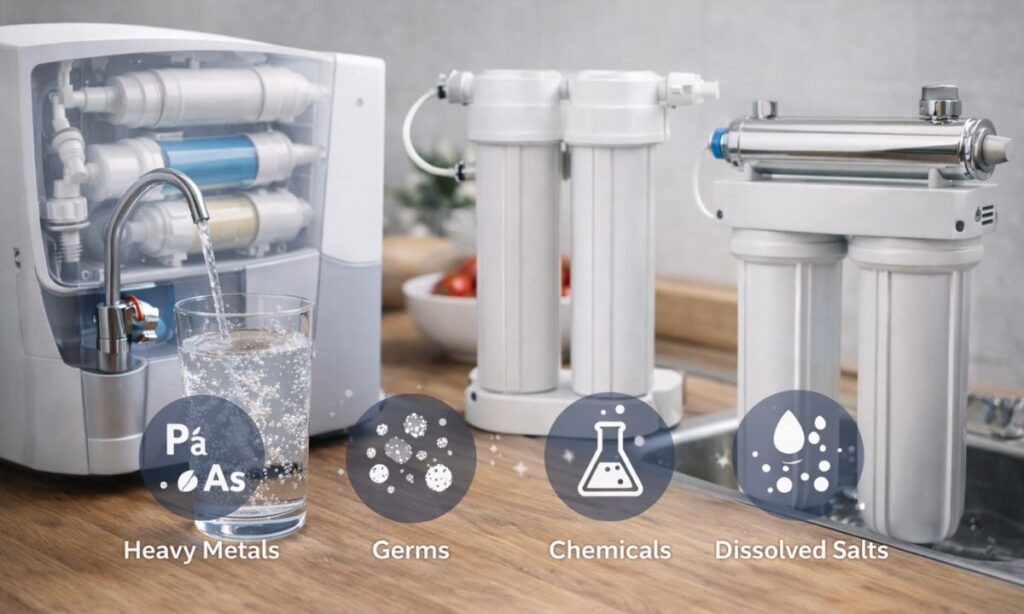
Some common toxins found in water include:
Heavy metals like lead and arsenic
Chlorine and chemical residues
Bacteria and viruses
Pesticides and industrial chemicals
Dissolved salts and minerals
Drinking water with these substances for a long time may affect your health. That is why using a good water filtration system is important for many households.
Types of Water Filters
There are different types of water filters available in the market. Each filter works differently and removes different types of impurities.
Let’s look at some common water filtration systems.
1. Activated Carbon Filters
Activated carbon filters are one of the most commonly used water filtration systems. These filters use carbon material to absorb impurities from water.
What Carbon Filters Remove
Carbon filters are effective at removing:
Chlorine
Bad taste and odor
Some chemicals
Organic compounds
Limitations
Although carbon filters improve the taste and smell of water, they may not remove dissolved salts, heavy metals, or microorganisms effectively.
Because of this, they are usually combined with other filtration technologies.
2. UV Water Purifiers
UV (Ultraviolet) water purifiers use ultraviolet light to kill harmful microorganisms in water.
What UV Purifiers Remove
UV purification is effective at eliminating:
Bacteria
Viruses
Microorganisms
Limitations
While UV purifiers can kill germs, they do not remove dissolved impurities, chemicals, or heavy metals from water.
This means UV purification alone may not remove all toxins present in water.
3. UF (Ultrafiltration) Systems
UF filters use a membrane filtration process to remove suspended particles and microorganisms from water.
What UF Filters Remove
UF filtration helps remove:
Bacteria
Dirt particles
Some microorganisms
Limitations
UF filters cannot remove dissolved salts or chemical contaminants from water.
4. Reverse Osmosis (RO) Water Filters
Reverse Osmosis, also known as RO filtration, is considered one of the most effective water purification methods.
RO systems use a special membrane that removes very small particles from water. This membrane allows clean water molecules to pass through while blocking harmful substances.
What RO Filters Remove
RO purification can remove:
Heavy metals like lead and arsenic
Dissolved salts and minerals
Chemical contaminants
Pesticides and nitrates
Bacteria and microorganisms
Because of this advanced filtration process, RO systems can remove a wide range of contaminants from drinking water.
Many households in Delhi install RO water purifiers in Delhi because they are highly effective at improving water quality in areas with high levels of dissolved impurities.
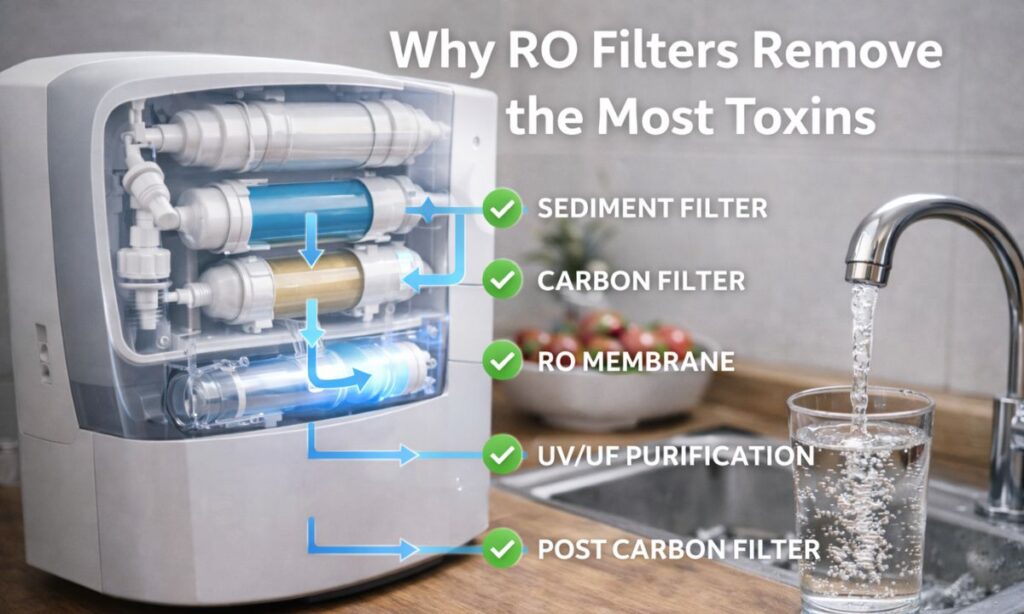
Why RO Filters Remove the Most Toxins
RO filtration is considered one of the best purification methods because it uses multi-stage filtration technology.
A typical RO water purifier may include several filtration stages such as:
Sediment filter – removes dust and large particles
Carbon filter – removes chlorine and bad odor
RO membrane – removes dissolved toxins and heavy metals
UV or UF purification – removes bacteria and viruses
Post carbon filter – improves taste
Because of these multiple filtration layers, RO purifiers are capable of removing a wide range of contaminants from water.
How to Choose the Right Water Filter
Choosing the right water filter depends on the quality of water in your area.
Here are some simple factors to consider:
1. Water Source
Different water sources contain different impurities.
Groundwater may contain high levels of dissolved salts
Municipal water may contain chlorine or chemicals
Understanding your water source can help you choose the right purification system.
2. TDS Level in Water
TDS (Total Dissolved Solids) indicates the amount of dissolved minerals in water.
If the TDS level is high, RO filtration is usually recommended.
3. Type of Contaminants
If your water contains:
Bacteria or microorganisms → UV purification may help
Chemicals or dissolved salts → RO purification is more effective
Importance of Regular Water Purifier Maintenance
Installing a water purifier is only the first step. To ensure it works properly, regular maintenance is important.
Filters and membranes can become clogged over time. If they are not replaced or cleaned regularly, the purifier may not work efficiently.
Many households search for water purifier service in Delhi to maintain their purification systems and ensure they continue to provide clean drinking water.
Regular servicing helps maintain the performance and lifespan of the purifier.
Benefits of Using a Good Water Filter
Using a good water filter can offer several benefits for you and your family.
Safer Drinking Water
Water filters remove harmful toxins and contaminants.
Better Taste and Smell
Filtration removes chlorine and unwanted substances that affect the water’s taste.
Health Protection
Clean water reduces the risk of waterborne diseases.
Convenience
Having a purifier at home ensures safe drinking water anytime.
Simple Tips to Keep Your Drinking Water Safe
Along with using a water filter, there are some simple habits that can help improve water quality at home.
Clean your water storage tanks regularly
This prevents contamination.
Replace purifier filters on time
Old filters may stop working effectively.
Use clean storage containers
This helps prevent bacteria growth.
Check plumbing systems
Old pipes can affect water quality.
These small steps can help maintain safe drinking water for your household.